Richard Stallman founder of the GNU Project and the Free Software Foundation (FSF) has reiterated his stand against Chrome OS and Cloud computing in general.
Read more »


Tampilkan postingan dengan label Richard Stallman. Tampilkan semua postingan
Tampilkan postingan dengan label Richard Stallman. Tampilkan semua postingan
Rabu, 15 Desember 2010

Kamis, 13 September 2007
Richard.M.Stallman calls for vigilance to safeguard ones Freedom
Richard M Stallman the father of GNU in a whole hearted interview with Peter Moon of ComputerWorld publication exhorts all Freedom loving community members to be aware of and vigilant about the pitfalls of turning a blind eye towards the less obvious details such as the version of GPL license used in various open source software.
Here are some of the quotes from the very interesting interview...
On difference between Free software and Open source...
On difference between Free software and Open source...
In terms of ideas, Free software and Open source are as different as could be. Free software is a political movement; open source is a development model.
Will free software community win the war against Microsoft ?The fact that Torvalds says "open source" instead of "free software" shows where he is coming from. I wrote the GNU GPL to defend freedom for all users of all versions of a program. I developed version 3 to do that job better and protect against new threats.Torvalds says he rejects this goal; that's probably why he doesn't appreciate GPL version 3. I respect his right to express his views, even though I think they are foolish. However, if you don't want to lose your freedom, you had better not follow him.
Nobody knows who will win this fight, because the outcome depends on you and the readers. Will you fight for freedom? Will you reject Windows and MacOS and other non-free software, and switch to GNU/Linux? Or will you be too lazy to resist?
Microsoft's aim, in the deal with Novell, was to make people scared to run GNU/Linux without paying Microsoft for permission. That is why we designed GPLv3 to make it backfire.
Kamis, 23 Agustus 2007
A talk by Richard M Stallman - Youtube video
This is a very interesting concise talk (or rather, answers to a set of questions) by Richard.M.Stallman the father of GNU movement. The video was shot by Arturo Di Corinto for Candida TV. This is one of the best video clips of talk by RMS I have come across in recent times.
Minggu, 04 Maret 2007
Nearthwort Obtain interviews Richard M Stallman - a transcript of the interview
Nearthwort Obtain is a website with a difference. While most websites concentrate on providing content in the form of text and graphics, this site's principal content is in the form of podcasts. That is right, it features interviews with famous personalities which you can listen to. And the quality of the content is also quite high. Nearthwort obtain is the brain child of Marc Fiszman who calls his podcast website the "Multidimensional Adventurer's Handbook".
Marc recently interviewed none other than Richard . M . Stallman, founder of the Free Software Movement. This is the transcript of an excerpt from this interview - made available with prior permission from Marc.
Interview with Richard . M . Stallman
Nearthwort Obtain interviews Richard M Stallman, the founder of the Free Software Movement and the man who put the GNU into GNU/Linux. There are two main parts to this interview. In part I, Richard introduces Free Software and explains what that is all about. And that leads into some quite heavy criticisms of the popular tech heroes, well they are probably heroes of quite a few you out there certainly not of Richard's. The first is lord of Linux, Linus Torvalds and next stop is Steve Jobs of Apple who, Richard claims, is as evil as Microsoft. In the second part of the interview, we move into some multidimensional discussions which focuses on the impact of freedom on the evolution of consciousness.
Marc : Could you briefly explain what you mean by the definition of Free Software ? There may be a lot of tech savvy people who will be listening to the show and they won't be aware of what that means and your involvement with that.
RMS: First of all, Free refers to Freedom here and not price. So you should think of Free speech and not free beer. When you understand the proper meaning of the word Free, you understand Free software. Free software means software that respects the user's freedom. It is not a matter of what the program does in the technical sense, but it is a matter of the social system that the program's developers use. In fact the social system respects your freedom, then it is free software. It is decided by the program's life and not it's code. Any program could be free software but most of them are not. So specifically, Free software means you the user has four essential freedoms.
Freedom 0 : Run the program as you wish
Freedom 1 : the freedom to study the source code and change it to do what you wish
Freedom 2 : the freedom to distribute the copies of the program to others.
Freedom 3 : the freedom to distribute copies of your modified versions as you wish
If the program gives you these four freedoms, it is Free software. If one of them is substantially missing, then it is proprietary software or user subjugated software and that shouldn't exist.
Marc: And what is the difference between Free software and open source software ?
RMS: The term open source was coined many many years later by people who were in the Free Software community and liked Free software but they didn't like the ethical and political approach of the Free software movement. They liked Free software in a practical sense. They appreciated it , they enjoyed the benefits of these freedoms. They didn't want to use the term freedom, they didn't want to look at these as an ethical question. they didn't want to ask whether it is wrong for a program not to respect your freedom.
So they coined another term more or less saying category software. That which enabled them to take a purely practical approach to the question. So they have an official definition of open source which is pretty similar to the definition of Free software in its practical resolve of those differences and they encourage the saying 'practice' but they don't say it is an ethical area instead they present practical benefits only. they present the question as purely practical.
They don't say that ethically speaking, software should be open source but we say that ethically speaking software should be Free.
So they coined another term more or less saying category software. That which enabled them to take a purely practical approach to the question. So they have an official definition of open source which is pretty similar to the definition of Free software in its practical resolve of those differences and they encourage the saying 'practice' but they don't say it is an ethical area instead they present practical benefits only. they present the question as purely practical.
They don't say that ethically speaking, software should be open source but we say that ethically speaking software should be Free.
Marc: Are you saying that Free software is a political movement where as open source is not ?
RMS: Absolutely.
Marc: But I have listened to another interview that you gave to about a year ago. I think you were talking about the development of the famous project Linux developed by Linus Torvalds.
RMS: He is in the open source camp.
Marc: Do you have beef with him or do you get along with him ?
RMS: Well we still have some disagreement because in the past few months he has been actively ridiculing the idea of freedom as something that shouldn't exist.
Marc: And that is your main problem with him...
RMS: Absolutely.
Marc: He claims that he doesn't take a political stand. Right?
RMS: He calls himself apolitical. I call him amoral.
But when you say that you are apolitical, that is itself a kind of political stand that is, ignore all those political questions.
Marc: Why should we care about Free software.
RMS: If you are using computers and using software and if you are using software which is not free, then you don't control what it does. Not you personally and not your whole community. A non-free program is controlled by its developer. The developer decides what it will do and also decides what it won't do. And so it is a tool for the developer to maintain control over society, to gain a power of the kind nobody should have. It is dangerous for the society to allow people, to allow anyone that kind of power. Someone I am not sure who it was, said code is law. What it means is that if you are doing software then the software decides what you are allowed to do. So that has the effect of being laws. These laws are being written by software companies which they can arbitrarily decide by fiat, the laws that are bound to you if you use that non-free software. I don't.
You can listen to the rest of this interesting interview where RMS apart from talking about Free software explains why Apple is as evil as Microsoft.
Minggu, 18 Februari 2007
News: Richard Stallman convinces Cuba to embrace GNU/Linux
 When you hear the name Cuba, it concocts in your mind a picture of bankruptcy, food shortages, drug shortages, rampant unemployment et al, at least some of them a direct side effect of the US trade sanctions [source BBC]. But one thing the Cubans can be proud of is their excellent health care system which rivals even that in the US. Believe it or not, Cubans boasts of a better life expectancy than the North Americans and Cuba has better infant and adult mortality rates than the US.
Being a communist state, it was only natural for Cuba to embrace GNU/Linux as the official OS of choice for all governmental departments. But what surprises me is why it took so long. AP news reports that in a recent visit to Cuba, Richard M Stallman was able to convince the Cuban government the advantages of using a Free OS in all government offices - definitely a big feather in the cap for RMS. He was visiting Cuba to speak at an International Conference on Communication and Technologies in Havana.
It might seem that RMS is only successful with governments which are predominantly socialist in their beliefs. But the fact is, many reasons he lists in favor of supporting Free software are valid and make perfect sense for all the governments the world over irrespective of their ideologies - including (I may add) the US government. The prominent reason being :
The inherent security threat in using proprietary software for mission critical situations or in matters of state security, for the simple reason that without being able to examine the code, users can't know what it's doing or what "back door" holes developers might have left open for future entry.
I feel happy that one more country has decided to embrace GNU/Linux in a big way. Kudos to the Cubans for their foresight.
Minggu, 26 November 2006
Richard M Stallman talks on GPL version 3 at the 5th International GPLv3 Conference in Japan
The fifth international GPLv3 conference was held on 22nd and 23rd of November in Akibara Tokyo Japan. A couple of months back, RMS had spoken at the 4th GPLv3 international conference held at Bangalore India. These conferences are a part of a series of events organized by Free Software Foundation to enlighten the public about the upcoming new version of GPL, more specifically to make them aware how GPLv3 will help them better in safeguarding their freedom vis-a-vis the software they use.
In Tokyo too, RMS gave a talk which concentrated on the upcoming GPLv3 and the major changes that they are thinking of bringing to the license in its current form. fsfeurope.org is running a transcript of Mr Stallman's talk in Tokyo which is a must read for any GNU/Linux enthusiast.
He dwelt in depth on a variety of topics such as the differences between GPLv1 and GPLv2, The changes that are aimed at GPLv3 such as better support for internationalization, better license compatibility with the Apache license and the Eclipse license, preventing tivoisation, fighting software patents by carrying an explicit patent license and a few other things.
It is really simple when you look at the logic provided by RMS. He is not concerned about any particular OS or software... rather, his number one priority is to conserve the freedoms enjoyed by the people who use Free software in a way such that nobody will be able to hold the Free Software Movement at ransom. Today Linux is the darling of many corporates with many of the heavy weights jumping on the Linux bandwagon. For any business, the fundamental aim is to make money. And with Linux becoming a viable platform, businesses are slowly realizing the advantages of embracing Linux. The only irritant that is standing in their way is the GPL license which they could do without. RMS and Free Software Foundation is working towards safeguarding the GPL by plugging all its loopholes so that it is not possible to circumvent it and thus compromise any of the freedoms guaranteed by GPL.
Sabtu, 28 Oktober 2006
What is Free Software? - an interview with Richard M Stallman
In recent times, if you ask me to name one personality in the free software community who has been as much reviled as being adored, I would say it is Richard M Stallman - the father of GNU. He has been bashed in the media as much for his dedication towards furthering the cause of free software and his firm stand against DRM. I believe that if not for GNU and GPL, the Linux movement would have been a non-entity. It was GNU which provided the wings to Linux to soar up and meet the competition head on. In many ways GPL gave it the moral edge over the BSDs which are also released under a free license.
Recently Robin Good had the honor of putting up RMS at his apartment in Rome and he used this occasion to ask him a couple of questions regarding free software. And RMS was good enough to clarify his doubts. During the course of the interview, he asks the following question :
RG: To support those, who like me, favor change over the control exercised by large corporations and media, what are the type of actions that individuals can take?
Richard Stallman: I wish I knew.
This is the greatest political question of our time.
How can we put an end to the empire of the mega-corporations and restore democracy? If I knew I would be the savior of the world.
What I think I can tell is that the media are crucial.
The power of the corporate media enables truth to be suppressed and lies to be passed as truth.
You’ve probably heard that a half truth can be worse than a lie. A lot of the things that our government’s and media say are one-tenth truths, nine-tenths lies. And it doesn’t take many of them together to create a completely fictional world view...
So I recommend that people stop listening to the mainstream media. Don’t watch television news, don’t listen to news on the radio, don’t read news on ordinary newspapers. Get [your news] from a variety of web sites, which are not operated under the power of business money, and you have better chance of not being fooled by the systematic lies that they all tell, because they’re all being paid by the same people to tell the same lies. Or nine-tenths lies.
Read the rest of this interesting interview.
This is the greatest political question of our time.
How can we put an end to the empire of the mega-corporations and restore democracy? If I knew I would be the savior of the world.
What I think I can tell is that the media are crucial.
The power of the corporate media enables truth to be suppressed and lies to be passed as truth.
You’ve probably heard that a half truth can be worse than a lie. A lot of the things that our government’s and media say are one-tenth truths, nine-tenths lies. And it doesn’t take many of them together to create a completely fictional world view...
So I recommend that people stop listening to the mainstream media. Don’t watch television news, don’t listen to news on the radio, don’t read news on ordinary newspapers. Get [your news] from a variety of web sites, which are not operated under the power of business money, and you have better chance of not being fooled by the systematic lies that they all tell, because they’re all being paid by the same people to tell the same lies. Or nine-tenths lies.
Senin, 18 September 2006
Open Source as Prior Art - its Motto and RMS's Opinion on its mission
Open Source as Prior Art is a project conceived by a group consisting of USPTO (United States Patent and Trademark Office), Eclipse foundation, IBM, Novell, Open Source Development Labs (the sponsors of Linus Torvalds), Red Hat and OSTG (the owners of slashdot.org, sourceforge.net and other sites).
The motto of OSPA is to improve the quality of software patents by providing better accessibility to Open Source software and documentation that can be used as prior art during the patent examination process.
Prior art is a term used by patent offices around the world to signify all information that has been disclosed to the public in any form before a given date. When a person or group applies for a patent for their work, the patent office will first check whether a similar work has been already released as prior art and if it is not - then, and only then a patent is allowed.

Richard.M.Stallman - the father of GNU - has voiced his strong reservations about this project in an article he has written, and feels that this project could backfire and will significantly weaken the resistance towards software patents of which he is a staunch critic. GNU strongly opposes having any truck with the idea of software patents.
It is interesting to see RMS wade towards his goal of creating a software patents free society disregarding all opposition to his beliefs. In fact, one of the qualities that I find in him which is common in all leaders who have made a mark in society is persistence. He doesn't (allow others to) dilute his beliefs for which he stands for. And this is what has brought GNU where it is now - basking in the limelight of grateful free software users.
Rabu, 30 Agustus 2006
Transcript of talk with Richard .M. Stallman on the sidelines of 4th International GPLv3 Conference held at Bangalore
Various governments in the developing world are slowly but surely waking up to the advantages that free software can provide both in terms of monetary savings as well as otherwise. One example of this new way of thinking is the Kerala state government's decision to use Linux in all the government run schools in the state. In fact this trend is so prominent that even national dailies have started dedicating valuable column space for bringing the latest going ons in the free software community.
One example of such a leading Indian English language newspaper is "The Hindu" . This Indian national newspaper boasts of a readership of over 4.5 million and has cultivated an image of providing balanced and unbiased news. Recently they concluded a series of surveys about the social aspects and the aspirations of the Indian populace in association with CNN-IBN television channel (the Indian subsidiary of CNN). I am an avid reader of this leading Indian English daily.
Today when I came across the interview of Richard.M.Stallman on The Hindu, it left me with a warm and fuzzy feeling. So without further ado and completely pleading ignorance about any copyright issues, here is the transcript of the interview of Richard.M.Stallman as published in The Hindu newspaper dated August 31st 2006.
Transcript of the interview with RMS
Richard Stallman is the famous for his brushes with authority. In the 1970's at the Massachusetts Institute of Technology Artificial Intelligence Laboratory, he reset the system passwords to null strings because he didn't like restricted computer access. He went on to found the free software movement and the GNU Project, which saw him author the General Public Licence (GPL) that defined the four basic rights of computer users. A million programmers now reputedly contribute to free software. And now, after 15 years, GPL is ready for its next version, GPLv3. Stallman has drafted it with legal counsel from Eben Moglen, professor of law and history of law at Columbia University. Excerpts from an interview with Anand Sankar on the sidelines of the 4th International GPLv3 Conference held at Bangalore.
Transcript of the interview with RMS
Richard Stallman is the famous for his brushes with authority. In the 1970's at the Massachusetts Institute of Technology Artificial Intelligence Laboratory, he reset the system passwords to null strings because he didn't like restricted computer access. He went on to found the free software movement and the GNU Project, which saw him author the General Public Licence (GPL) that defined the four basic rights of computer users. A million programmers now reputedly contribute to free software. And now, after 15 years, GPL is ready for its next version, GPLv3. Stallman has drafted it with legal counsel from Eben Moglen, professor of law and history of law at Columbia University. Excerpts from an interview with Anand Sankar on the sidelines of the 4th International GPLv3 Conference held at Bangalore.
Q. What are the main changes in GPLv3 and why are they necessary ?
RMS: Various changes are proposed for various reasons, so there is no general reason. There are different kinds of reasons. First of all, some changes have to do with fighting against software patents. GPLv3 has an explicit patents licence and it has limited kind of patent retaliation. Consider if Company A is running a version of a GPL-covered program on which they have made improvements and they get a software patent for the technique that it will feature, and then someone else, B, makes similar improvements on that program, then A can't sue B. If they do, then they lose the right to continue maintaining that program. So it is a way in which we can prevent treachery to the community.
We have made the results of GPL as uniform as possible, independent of national copyright law variations. We have defined two new terms, propagate and convey, instead of copy and distribute.
Q. The new version takes DRM (Digital Rights Management) head on. India might also go ahead with an amendment to the Copyright Act of 1957. What consequences will it have ?
RMS: The media companies are trying to take total power over the public. They want to publish books, movies and music in formats that are encrypted and that are designed for the sole purpose of controlling the public. So their idea is that nobody should be allowed to or able to make a player, except with their approval.
The companies want to modify GPL-covered free software to restrict the user. The next thing they want to do is ensure we users cannot change the program again.
And this brings them in direct conflict with GNU GPL, which says you are free to change the program and redistribute it and the next person too has freedom to make the changes he wants to make.
Q. Do you feel that the Kerala (an Indian state) Government's decision to start using free software in schools is something that the rest of the country will follow ?
RMS: If you teach students to use proprietary software you are teaching them to be helplessly dependent on a particular company. And that is not good for society as a whole. So, the schools should not do it. What the Kerala government is doing is the right thing and all other states in India should be doing this.
Q. There are a lot of misconceptions about free software. What kind of an economic model does an entrepreneur look at when he starts out with free software ?
RMS: I want to ask you why that question is worth asking. First of all there are many people who don't have to make money. Importantly even if a person has to make a living, he doesn't have to make a living from everything he does.
Lots of people develop free software in their free time and there are people who have to make a living and they do make a living.
To jump from, this person is not rich and therefore has to work, to this person can't write free software because he is not paid to write it, is an error.
There are over a million contributors to free software, a substantial fraction is getting paid and a majority are volunteers.
I suspect the reason people bring up this question of economics as a secondary detail is because they are labouring under the misconception that the free software community is impossible, unless the developers are getting paid.
Q. Catering to local needs is a stated goal of free software but GPL itself has not been officially translated into local languages. Your comments.
RMS: We are trying to write the text in such a way that its results are as uniform as possible in all countries. And for the same reason, uniformity of results, we are not translating it. Every translation would be an opportunity to make a mistake. And any mistake could be a disaster. Free software must be written in English and the reason is it is the language understood by programmers around the world. Obviously to have that in other languages is a good thing. So, we have encouraged others to publish translations that are clearly marked unofficial and we link to them from our site. You can use it as a guide if you don't read English.
For more information on the GNU project visit gnu.org.
Update (2nd September 2006): A reader of this blog has kindly pointed out the online version of the interview (which I couldn't find earlier and hence the reason for this transcript) as well as another interview with RMS carried on the Financial Express (an Indian newspaper).
RMS: Various changes are proposed for various reasons, so there is no general reason. There are different kinds of reasons. First of all, some changes have to do with fighting against software patents. GPLv3 has an explicit patents licence and it has limited kind of patent retaliation. Consider if Company A is running a version of a GPL-covered program on which they have made improvements and they get a software patent for the technique that it will feature, and then someone else, B, makes similar improvements on that program, then A can't sue B. If they do, then they lose the right to continue maintaining that program. So it is a way in which we can prevent treachery to the community.
We have made the results of GPL as uniform as possible, independent of national copyright law variations. We have defined two new terms, propagate and convey, instead of copy and distribute.
Q. The new version takes DRM (Digital Rights Management) head on. India might also go ahead with an amendment to the Copyright Act of 1957. What consequences will it have ?
RMS: The media companies are trying to take total power over the public. They want to publish books, movies and music in formats that are encrypted and that are designed for the sole purpose of controlling the public. So their idea is that nobody should be allowed to or able to make a player, except with their approval.
The companies want to modify GPL-covered free software to restrict the user. The next thing they want to do is ensure we users cannot change the program again.
And this brings them in direct conflict with GNU GPL, which says you are free to change the program and redistribute it and the next person too has freedom to make the changes he wants to make.
Q. Do you feel that the Kerala (an Indian state) Government's decision to start using free software in schools is something that the rest of the country will follow ?
RMS: If you teach students to use proprietary software you are teaching them to be helplessly dependent on a particular company. And that is not good for society as a whole. So, the schools should not do it. What the Kerala government is doing is the right thing and all other states in India should be doing this.
Q. There are a lot of misconceptions about free software. What kind of an economic model does an entrepreneur look at when he starts out with free software ?
RMS: I want to ask you why that question is worth asking. First of all there are many people who don't have to make money. Importantly even if a person has to make a living, he doesn't have to make a living from everything he does.
Lots of people develop free software in their free time and there are people who have to make a living and they do make a living.
To jump from, this person is not rich and therefore has to work, to this person can't write free software because he is not paid to write it, is an error.
There are over a million contributors to free software, a substantial fraction is getting paid and a majority are volunteers.
I suspect the reason people bring up this question of economics as a secondary detail is because they are labouring under the misconception that the free software community is impossible, unless the developers are getting paid.
Q. Catering to local needs is a stated goal of free software but GPL itself has not been officially translated into local languages. Your comments.
RMS: We are trying to write the text in such a way that its results are as uniform as possible in all countries. And for the same reason, uniformity of results, we are not translating it. Every translation would be an opportunity to make a mistake. And any mistake could be a disaster. Free software must be written in English and the reason is it is the language understood by programmers around the world. Obviously to have that in other languages is a good thing. So, we have encouraged others to publish translations that are clearly marked unofficial and we link to them from our site. You can use it as a guide if you don't read English.
For more information on the GNU project visit gnu.org.
Update (2nd September 2006): A reader of this blog has kindly pointed out the online version of the interview (which I couldn't find earlier and hence the reason for this transcript) as well as another interview with RMS carried on the Financial Express (an Indian newspaper).
Ciaran O'Riordan points out to the transcript of the entire presentation (not the interview) given by Richard.M.Stallman at the 4th international GPLv3 conference held on 23rd August at Bangalore.
Sabtu, 08 April 2006
My Indomitable Thoughts on GNU, Linux, Open Source, Java and Free Cats and Dogs
 Recently, when I ran a transcript of a talk given by Richard Stallman at the Australian National University, I never expected to get any adverse remarks about him and on the views expressed by him on problems faced by the free software community. But that was not to be. I was appalled to find a lot of comments ridiculing RMS for the views aired by him on various sensitive topics.
In fact, the sheer number of these negative comments make me feel that these were made not by free software users but by people who have a stake in proprietary software and they were making these comments posing as GNU users to spread FUD among potential free software converts. In real life, I have yet to come across a person who finds use for free software and who hold negative views about the leaders who made this possible. And if somebody does that, I would call it crass opportunism. RMS, Linus Torvalds, Bruce Perens, Alan Cox and many others have made great contribution in the evolution of GNU and open source movement to its present form.
But let us analyse what RMS said in his talk. His comment that Linus was apolitical when taken within the larger context of his appeal to give GNU equal credit makes perfect sense. Linus has himself gone on record saying that he hates playing politics and would like his software to speak for itself. In fact, Linus Torvalds and RMS think in entirely different planes. When the former likes to limit himself to the technical aspects of the free software , the latter thrives more in the political plane. But by doing so, they both play a very significant role in the betterment of the free software community. While Linus works to improve the Linux kernel making it more robust, RMS acts more like a watch dog for the free software community. He keeps track of the changes wrought by the powerful proprietary lobby and cries wolf when he sees one - like changes in laws which threaten one's freedom.
And much of what RMS said in his talk makes perfect sense. Take java for instance. Presently, Sun has a major say in shaping the future of Java language. It has not released the the implementation libraries under an open licence be it GPL or open source. Now there would have been no cause for concern if things remain the same even in the future. But what happens in 10 or 15 years from now, in the advent when Sun finds it difficult to stay afloat and gets acquired by say Microsoft ? Corporate acquisitions happen all the time. If an Adobe can acquire its arch rival Macromedia, what is stopping Microsoft from getting a controlling stake in Sun Microsystems? Will the language Java remain the same as it is now? Will the programs created in Java continue to run on Linux as it does now? For any language to thrive, it should be open and no single corporation should have a dominant say in chalking out its direction. And for Java to be really free, it has to be immune to corporate acquisitions. When you take this into consideration, what RMS said about Java not being truly free makes perfect sense.
The proprietary software lobby consider GNU as their arch enemy. If the free software movement gets adopted by the masses, then that will spell the death-knell for many of the non-free software firms as there won't be a market for their products. So they utilize every opportunity to attack the moves made by GNU and open source group.
When RMS talks about Treacherous Computing, we'd better sit up and take notice. Just going through the list of computer models with in-built treacherous computing chip should give a broad idea of the extent to which this has creeped into our lives. True, DRM is just a technology and the technology in itself is not bad. But the ways in which this technology is put to use by the corporations to stifle ones freedom is what prompts leaders like RMS to rally against this technology.
I believe GNU and open source to be the two sides of the same coin. Where open source has proved itself as a successful business model, GNU has remained stead fast in safeguarding the freedom of its users. Open source needs the strength of GNU ideology to maintain its focus in providing robust software and GNU in turn will benefit from the large collection of open source software under its fold. And it will be in the larger interests of the freedom loving users if open source and GNU sink their minor differences and act in synergy with each other.
It is a common misconception that free software stands for free as in free cats and dogs. That is not true. GNU doesn't say that one cannot sell or make money off the software one releases under GPL. Only that one has to make available the source code of the program to the user on demand. When you think about it, to even move an atom or molecule, one has to expend energy. And it is fundamentally wrong to expect some thing free of cost. Because what you got for free, another would have slogged to create it and you are actually enjoying the fruits of another person.
So the big question is how does one pay for the free software one uses? Interestingly, money is only one form of payment. There are other forms of payment like doing a favor in return for the convenience of your freedom. For example, one can spread the word about free software and open source. One can hand out CDs of GNU/Linux to ones friends, colleagues and relatives and persuade them to use it. I believe that by writing about free software on this blog, I am paying back to the free software community for the excellent software that I use.
Free software and open source have advanced so much that money has become a minor issue for it.Take the case of Wikipedia - the open and free encyclopedia which anyone can edit. When they were in need of funds, money started pouring in from all quarters and they were able to raise over 100,000 US dollars in a matter of weeks. What the GNU movement desperately need to make further inroads into the desktop market is more publicity and awareness which, as a user of free software, each one of us can provide. And if each one of us take it upon us to spread the word, I believe it will make a marked difference.
So the big question is how does one pay for the free software one uses? Interestingly, money is only one form of payment. There are other forms of payment like doing a favor in return for the convenience of your freedom. For example, one can spread the word about free software and open source. One can hand out CDs of GNU/Linux to ones friends, colleagues and relatives and persuade them to use it. I believe that by writing about free software on this blog, I am paying back to the free software community for the excellent software that I use.
Free software and open source have advanced so much that money has become a minor issue for it.Take the case of Wikipedia - the open and free encyclopedia which anyone can edit. When they were in need of funds, money started pouring in from all quarters and they were able to raise over 100,000 US dollars in a matter of weeks. What the GNU movement desperately need to make further inroads into the desktop market is more publicity and awareness which, as a user of free software, each one of us can provide. And if each one of us take it upon us to spread the word, I believe it will make a marked difference.
Senin, 03 April 2006
The unabridged selective transcript of Richard M Stallman's talk at the ANU
Richard Matthew Stallman, the father of the GNU movement once gave a talk at the Australian National University where he explained his stand on the name GNU/Linux, the Digital Millennium Act, DRM which Stallman chooses to call Digital Restriction Management and software idea patents. He talked for over one hour explaining and throwing light on these and many other topics of interest to GNU and all freedom loving people.
RMS on why people should call it GNU/Linux instead of just Linux
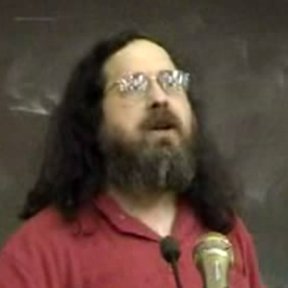 ... So the goal we had set out to reach in 1984 had been reached (with the development of the Linux kernel). But at the same time, a confusion developed, we started thinking that the entire operating system was Linux. And this confusion was a serious blow to the free software movement. Because, before that time, the people who saw various pieces of GNU knew that they were doing so and they became GNU fans. And so when they came across the articles written about the philosophy of GNU, they wouldn't guarantee to agree with us but at least they would pay serious attention and say we are fans of GNU and this is the philosophy of GNU.
After there was a complete GNU system with Linux that you could get to run, people started thinking that it was Linux. But before that point, our software spread the philosophy and our philosophy help spread the software because when the people read this, if they agree, they will be motivated to develop more free software and add to GNU.
However after people started using essentially the GNU system with Linux added, and called it Linux, it no longer led then to the philosophy associated with GNU - the philosophy of free software. Instead of that, the people read the philosophy that was associated with the name Linux. The apolitical philosophy of Linus Torvalds who thinks that all software licences are legitimate and it is wrong ever to violate them. So his views on this are more or less the same as Microsoft's. Now he of course has the right to promote his views but I object to our work becoming the main basis for promoting his views because it is attributed to him directly by labeling the GNU system as Linux. And that is why I ask people to call the system as GNU/Linux.
Give us equal mention. We need it. We need it not just because it is fair but because it will help people recognize what we have done so they will think about what we are asking them help us do. Our work is not finished. People will sometimes give me advice which in other circumstances might have been wise. They would say, it looks bad to ask for credit. And so they say, when the people call the system Linux, smile to yourself and take pride in a job well done. This would be very wise advice if it were true that the job is done. We made a great beginning. We have developed more than one free operating system in our community and many free application programs. But there are many application programs we still have to develop. We have developed free operating systems used by 10's of millions of users. But there are 100's of millions of users of proprietary operating systems and even the people using free operating systems often use proprietary programs on top of that. So we have a tremendous amount of work to do.
RMS on Digital Millennium Copyright Act and DRM
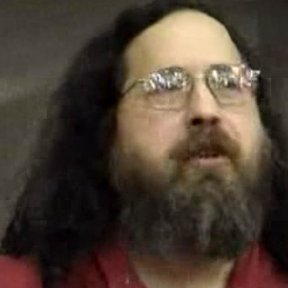 ...
...Today the main question is whether we would be allowed to develop the software that the users want. In the US, there are already two laws forbidding the development of various kinds of free software. One of these laws is the Digital Millennium Copyright Act - The law that forbids free software to access encrypted or some how blocked off data. This law was used to prohibit the free software from playing a DVD. If you buy a DVD in the US, it is legal for you to watch the movie. But the free software that would enable you to do this on your free GNU/Linux system has been censored completely. There is in fact no lawfully available software in the US that you could use to watch a DVD.
But I am afraid, they have carried this even further. There is a certain computer game that is accompanied by a network server that allows people to play against each other and they communicate with some kind of cryptic protocol. And people figured this out and implemented their own server and they have their own free game which is some what similar. They wrote it themselves and is not a modified work within modified proprietary game that won't have been illegal anyway. So they wrote their own game and they have their own server. And you could use either game and talk to either server. And they were sued. A court ruled that these free alternatives are illegal ones under the digital millennium copyright act. Now please note that using either one of these free alternatives doesn't enable one to use the proprietary one without paying. We have here two separate products being tied together through the use of this law.
The Digital Millennium Copyright Act is used to impose DRM (Digital Restriction Management) on the public. So they are not satisfied with prohibiting people from sharing with their neighbours. They want to redesign your computer system to stop you from sharing and this is wrong. DRM is fundamentally wrong in itself because it stops people from cooperating with their neighbours. And a government of the people, by the people and for the people will not enact laws that support DRM in any way. So that is one law which prohibits certain kinds of free software.
RMS on Software Idea Patents
 Another law in the US which prohibits free software from any progress of any kind is the patent law. In the US, any kind of software idea for use in any kind of software can be patented by some one. Which means that when you implement that idea, you could get sued. Now large programs combine many ideas. A program can combine easily 100's or 1000's of different ideas. And if any one of these ideas is patented, your chances of developing a large program without infringing many patents is absurdly small. So software patents are obstacles to all software development. And they threaten users as well. The users can also get sued for the software they are using, for the way they have configured their machines and so on.
And this is advertised as a scheme to promote progress. But economic research shows just the opposite. Now I used to ask people to imagine how many different patents one program could be implemented by at once. I would say dozens, may be 50. Well now we do not have to imagine. Somebody did a study, must have been a lot of work. He took one particular program named Linux - the kernel of the GNU/Linux system. And he checked for all the US patents that covers something that could be found somewhere in Linux. He found 286 different US patents that covers parts of Linux. And Linux is just one part of the system. I saw an estimate somewhere else that it was 25 % of the system.
So if we note, we can get a rough estimate of around a 100,000 or so different software idea patents in the US that would cover ideas used some where in GNU/Linux system of today. Of course, it is a rough estimate and it wouldn't surprise me if it were only 30,000 or as much as 300,000. So now you see the danger. And since this danger is not only for free software developers but for all software developers aside perhaps from the mega corporations, there is actually a very broad movement against the software idea patents. This movement which I am led to say I played a major role in starting about 40 years ago has actually persuaded the European Parliament which voted to reject software idea patents. Now European Union is set out to have only a little democracy in it. ... The process is not over yet and we are still fighting it but there is a good chance that we can win at the level of the European Union. Of course Microsoft wants software idea patents. Microsoft has stated that it intends to use software idea patents to kill off GNU/Linux.
RMS on developing a free Java platform and on Flash and MS Word file formats
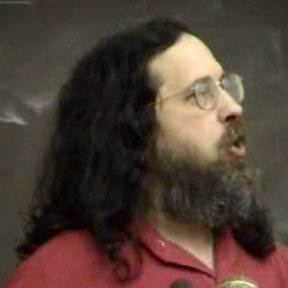 One of the big dangers in our community is that people start putting non-free software into the system and they call it bonus. They say it is a nice addition, it gives more features. Yes it gives you more features at the cost of your freedom. When these things are distributed separately, they call it value added packages. And that term makes it stick about your values. It says it values your convenience only, don't value your freedom. So I prefer to call them freedom subtracted packages. That makes a statement about my values.
But they also include them, incorporate them in various distributions of GNU/Linux system. For instance, Sun has a version of the GNU/Linux system which they call the Java Desktop. Now they are not giving credit either to Linux or GNU but that is not an important issue when we look at what they are doing which is really bad that is, including several non-free programs including Sun's Java platform. Sun's Java platform is not free software. You shouldn't install. If you do install it, you are putting yourself at risk of creating other problems for other people. There are people who are so attracted to java - they think this idea that will run on all platforms is so exciting - that they stop paying attention to things like what to pay attention to. They will write programs in java, they will write free programs in java and offer to people and it turns out it doesn't run on all platforms, it doesn't run on a free platform.
You see, we have free java platforms. But they don't implement all features yet. Sun keeps on adding features and our efforts are speeding up but they are still behind. So many of the java libraries or the newer language features, we don't have yet. So if you use them in your free program, it would run on a free platform and you will find that your program is actually an inducement to people to install non-free software. The same thing is happening when websites use java or websites use flash.
The use of flash websites is a major problem for our community. People are working in free software for playing flash. And now it more or less handles just the display of things but it doesn't handle reading input. If you see a website using flash, complain. Complain to the site developer saying you are excluding people who believe in maintaining their freedom. Please get rid of the flash from your site.
A similar problem occurs when people distribute files in word format. And peoples approach to this used to be find some way to arrange to read it. And I pointed out that this is actually not a right response in the long run. You see, people worked on figuring out the details of the secret of word format. And figured out a lot of them. So there is free software today like openoffice that can read word files. But it is still short term thinking just to address this problem as right because Microsoft can keep changing the word format. And every time they make word files in this new format and they send to other people and other people can't read them. And so they feel like have to upgrade word as well and the result is a large number of these windows users are using new version of word and they send us these word files in a different format which our software can't read. And maybe it is patented and we will get sued if we make our free software read.
To solve this office problem, we have to remove Microsoft's control over the language that people use to communicate with each other and with themselves - like saving your files so you could read your files later. We have to refuse to use word format for this. When people send you a word file, therefore don't cope with the situation by reading it. Instead it is much better to send back a message saying - please don't ever send me word files. This is contributing to a serious social problem. But send it in public documented formats which everyone is free to implement so you are not giving a particular company any power it shouldn't have.
Fundamentally, the use of non-free software program gives somebody power of the kind that nobody should have. And therefore software should be free. Computer users should always have the freedom to control their computers. And they should be free to cooperate with each other in doing so.
RMS on Free software Vs Opensource
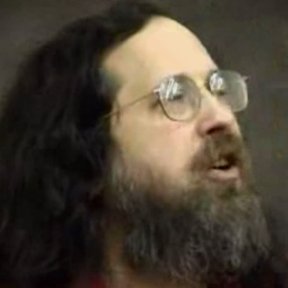 ... In 1998, some of them started another way of talking about free software where they call it opensource. And with this different name, they have associated a different set of ideas. They don't say that this is a matter of the freedom that every user should have. In fact, they would often say that they recommend a development methodology which they say will generally produce more powerful and reliable software. And that may be true. I hope it is true. It would be nice if freedom provides as a byproduct, security of software. But it is a terrible mistake, I think, to focus all the attention on these short term practical benefits and ignore freedom itself. The danger is, then people would fail to defend their freedom when it is threatened as they wouldn't recognize what it is.
So if you imagine two people, one who is convinced by the opensource philosophy and another who is convinced by the free software philosophy. And you show these people a powerful, reliable, convenient, non-free program. What are they going to say ?
The opensource guy would say - "I am surprised you were able to do such a good job without letting the users study the code and find the bugs for you. But I can argue with the facts. It seems a powerful and reliable program". And he will probably use it. Where as the free software person will say - "I don't care how powerful and convenient it is if it takes away my freedom. I wouldn't pay such a high price for that convenience. I am going to get to work on a free replacement for this program right away before anybody else get tempted to use that program".
One person would give up his freedom when ever you can offer him convenience in its return and the other would fight for his freedom. And if enough of you fight for your freedom, freedom may prevail.
RMS on RMS
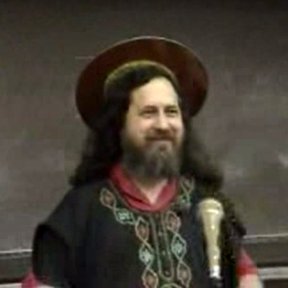 Now people sometimes have accused me of having a holier than thou attitude. I think that is not actually true. I don't criticise and condemn people just because they don't stand up for free software strongly as I do. As long as what they are doing is good, I will say what they are doing is good and I might suggest somethings they could do.
However, I do have a holy attitude because I am a saint. It is my job to be holy. I am saint iGNUcius of the church of Emacs. I bless your computer my child. Emacs started out as a text editor which became a way of life for many users because it could do almost everything without exiting Emacs. And ultimately a religion. We even have a great schism between two rival versions of Emacs. And now we have a saint too. Fortunately no gods. In this church, instead of gods, we have an editor.
To be a member of the church of Emacs, you must recite the confession of the faith. You must say, there is no system but GNU and Linux is one of its kernels. The church of Emacs has certain advantages compared with some other churches. To become a saint in the church of Emacs does not require celibacy. However, it does require living a life of moral purity. You must exorcise the evil proprietary operating systems that posses what ever of the computers under your control and install in all of them a holy free operating system instead. And then, only install free software on top of that. If you make this commitment to live by it, then you too would be a saint and you may eventually have a halo if you can find one because they don't make them any more.
Sometimes, people ask me if it is a sin in the church of Emacs to use the editor Vi. It is true that Vi-Vi-Vi is the editor of the beast. But using a free version of Vi is not a sin but a penance. And sometimes, people ask me if my halo is really an old computer disc. This is not a computer disc. It is my halo. But it was a computer disc in a previous existence.
This talk was originally video taped by ourTV - a community TV channel in Canberra but unfortunately, they were unable to get their project off the ground because of lack of funds. You can watch the whole video here (240 MB download).
This talk was originally video taped by ourTV - a community TV channel in Canberra but unfortunately, they were unable to get their project off the ground because of lack of funds. You can watch the whole video here (240 MB download).
Suggested Reads:
Langganan:
Postingan (Atom)